Canadian customers finalizing 2026 budget: Check out our 100% Canadian owned and operated reseller, Canadawide Scientific.
A New Chapter of Shared Ownership
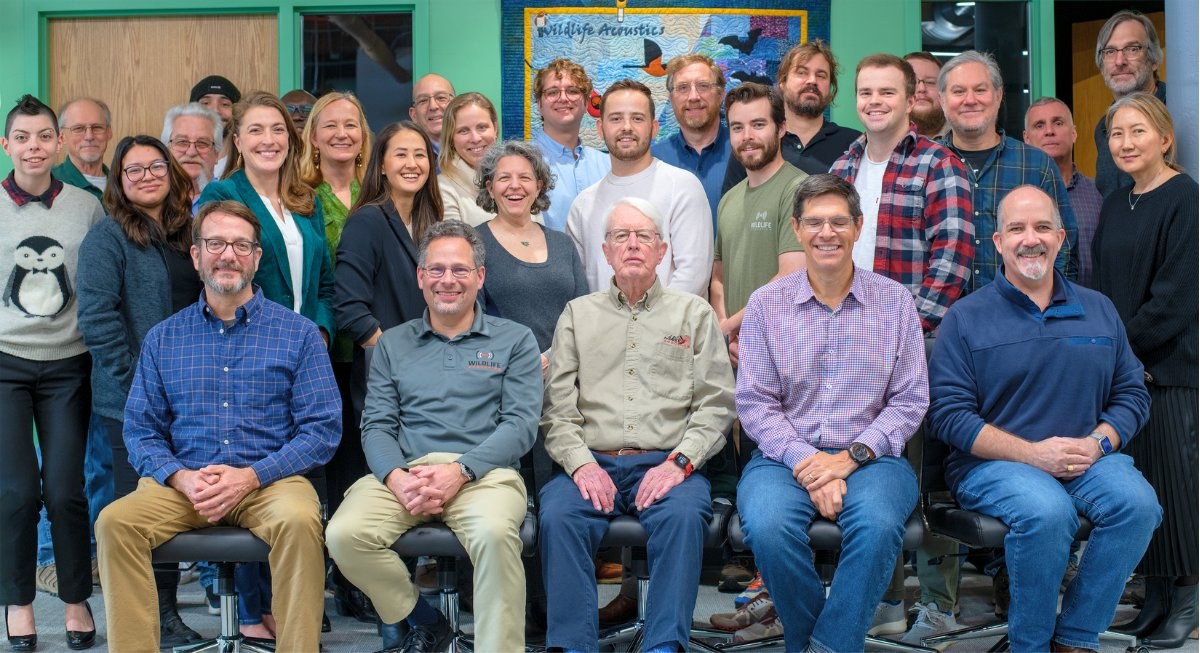
On August 29, 2025, Wildlife Acoustics became an employee-owned company. It’s a big milestone—and a deeply meaningful one for everyone who works here. But what inspired this transition? And why now?
We sat down with our Founder and CEO Ian Agranat to talk about what the transition to employee-ownership means to him personally, why he chose it over more conventional paths, and what he hopes this move will mean for the future of Wildlife Acoustics. Our conversation touched on everything from his hopes for the company’s legacy to how this moment mirrors a personal milestone in his own life. What follows is a look into the heart behind the decision—and the vision guiding us forward.
Read on to hear what he had to say.
_____
What does it mean to you, personally, to know that Wildlife Acoustics will continue after you (one day) retire?
As I think about my eventual retirement in the years to come and how I feel about letting Wildlife Acoustics go on without me, I am also a father with my son leaving home to attend college abroad in a few days. The feelings are very similar. I am very proud of what Wildlife Acoustics has become. I had some influence and tried my best to be a good leader. I made mistakes along the way. And my employees, to whom I’m deeply grateful, deserve most of the credit for what Wildlife Acoustics is today.
When my retirement finally comes, it will be hard to say goodbye. Watching Wildlife Acoustics fledge and continue to grow and succeed without me will be one of my proudest accomplishments, superseded only by watching my son succeed in life on his own.
In your own words, why was now the right time to implement an Employee Stock Ownership Plan?
I only learned about ESOPs in late 2023 (and it took this long to make it happen!). If I had known about them a few years earlier, I might have pursued one then. As I was approaching 60, I thought it was time to start planning for the future, knowing that I probably won’t be able to continue running Wildlife Acoustics effectively forever, although I hope to do so for many years to come. When I learned about ESOPs and their long-term time horizon, I knew this was the right time.
What motivated you to pursue employee ownership over other options, such as selling to another company or private equity?
Before Wildlife Acoustics, I was involved as an employee, owner, investor, and buyer in traditional mergers and acquisitions, as well as private equity transactions. In 2000, I sold a previous business I had built over 10 years to another company, and within a few years, there was nothing left of it or the technology we had created. I made some money at the time, but I was ultimately disappointed by the result.
While I would gain a larger and more immediate personal financial reward by pursuing a conventional private equity management buyout or sale of the business, I know that these transactions rarely end well for employees and customers. New owners focus on maximizing profits by reducing staff and spending on research, development, and support, while raising prices and milking the business until they get their return on investment.
I want Wildlife Acoustics to continue serving our customers, employees, and community long after I’m gone. Some of my advisors introduced me to ESOPs, and I was immediately attracted to this idea of transferring ownership from current owners to employees. I see this as a great fit for the culture of collaboration we have created and consistent with the loyal and long-term employees we’ve had for many years.
How does employee ownership align with the company’s long-term vision and values?
The culture at Wildlife Acoustics is very collaborative. I have always provided employees with some sense of ownership through stock options, shared detailed financial statements, and looked for consensus and collaboration wherever possible. Transferring my majority ownership in Wildlife Acoustics more equitably to all employees doubles down on my values of equity, democracy, and collaboration.
Why does the idea of shared ownership and workplace democracy resonate with you?
I don’t believe policies that help the rich (business owners) get richer at the expense of workers are ultimately good for the economy or society, and I don’t think moneyed interests should have more political influence than ordinary people. Sharing ownership and decision-making more equitably with employees resonates with my values.
Will employee-owners have a voice in major company decisions?
Informally, our employees have always had a voice in major company decisions. My door, as well as those of our management team, have always been open, and we do our best to foster consensus-building in our decision-making process. That’s been part of our culture from the beginning, and employee ownership doesn’t inherently change this. That said, as owners, some employees may feel more empowered to speak their minds, and I welcome that.
Ultimately, what do you hope this transition will achieve for the company, its employees, and its customers?
Ultimately, I hope that Wildlife Acoustics continues to thrive long after I’m gone, innovating and advancing the technology used for acoustic monitoring in bioacoustics and ecoacoustics applications, leading the market with the best products (both in function and in value), and continuing to be seen as a partner more than a vendor to our valued customers. It’s our customers who do the hard work in the field to advance our understanding of biodiversity, animal behavior, climate change, and conservation. I hope Wildlife Acoustics continues to be their first choice for products and technology, supporting their vital work.
How would you like Wildlife Acoustics to be thought of in the years to come?
Wildlife Acoustics, with the first commercially available bioacoustics recorders, really enabled the rapid growth of the use of acoustics for conservation and scientific research over the past couple of decades. With our technology, our customers have been able to find endangered species, advance our understanding of climate change and human activity on wildlife populations, enable conservation, and study animal behavior. I have no doubt that Wildlife Acoustics will continue to advance the fields of bioacoustics and ecoacoustics in the years to come.
_____
To learn more about Wildlife Acoustics' history and the milestones along the way that brought us to the present day, check out our history.
Join our mailing list to get notified about upcoming training opportunities, live webinars, quarterly grant offerings, product releases, and more.
Thank you for signing up to our mailing list.
You can unsubscribe or change your email settings at any time by clicking "Manage Preferences" link at the bottom of any mailing list emails we send you.
