Wrapping up for the field season? Before putting your recorders away, contact our Support Team by mid-January for inspection and repair.
When people think of bats, they often envision silent animals flying through the night. But in reality, bats are constantly “talking” (just not in a way we can usually hear). In this short guide, we’ll cover some bat basics: what they are, how they use sound to navigate, and what their calls and noises can tell us.
What Are Bats?
Bats are flying mammals found all over the world, with more than 1,400 species identified. All bats belong to the order Chiroptera, which includes two major suborders: Microbats (cute and cuddly) and Megabats (big and cuddly).
Microbats are small, echolocating, and mostly insectivorous bats, while Megabats are large (“flying fox” is an aptly nicknamed Megabat species) and eat mainly fruit. Megabats don’t echolocate; instead, they rely on excellent night vision and a strong sense of smell to find food.
The vast majority of all bats are nocturnal, meaning they are most active after sunset. And that’s when Microbats’ unique use of sound really comes into play. For the rest of this blog, we’ll be focusing on their use of echolocation.
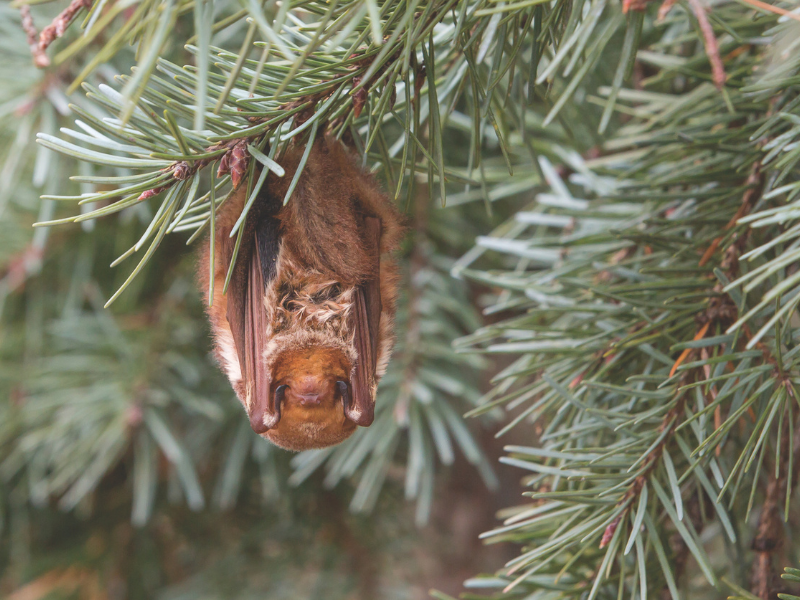
How Do Bats Use Echolocation?
Bats “see” in the dark using a process called echolocation. Briefly, here’s how it works:
- A bat emits high-frequency sounds (bat calls) from its mouth or nose.
- These sounds bounce off objects like insects, trees, and buildings.
- The speed of the returning echoes tells the bat where objects are, how big they are, and even how fast they’re moving.
This allows bats to effectively create a 3D map of their surroundings and hunt and navigate in complete darkness with incredible precision.
Most bat calls are ultrasonic, meaning they are too high-pitched for humans to hear without specialized equipment.
What Do Bat Calls Sound Like?
Although you and I can’t hear most bat calls with just our ears, they can be recorded and translated into audible sounds.
Different species produce different types of bat noises, including:
- Search-phase calls: Regular pulses while flying and scanning the environment.
- Feeding buzzes: Rapid bursts of sound when closing in on prey.
- Social calls: Lower-frequency sounds for communication between bats.
Here is a spectrogram of a big brown bat, you can see the initial search-phase calls, leading to a feeding buzz as it closed in on it's prey. Followed by an interesting social call before it began to do search-phase calls once again.
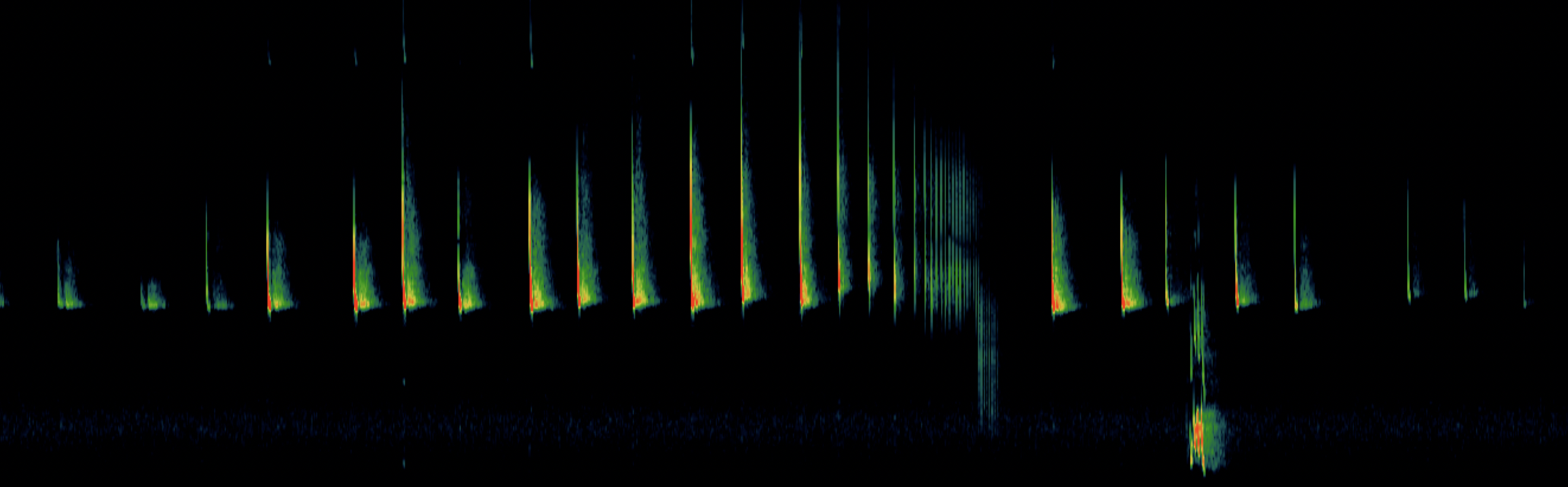
If you convert these bat calls into a human-hearable range, they often sound like clicks, chirps, and buzzes. Each species has a unique call pattern, which scientists and enthusiasts use for identification.
Why Bats (and Their Calls) Matter
Understanding bat noise is indeed fascinating. It’s also important. Bats help pollinate more than 500 plant species, including bananas and agave, and they assist with seed dispersal, ensuring forest regeneration. They are also natural pest killers, consuming hundreds of mosquitoes an hour. In these ways, bats are vital to agriculture and public health. By studying bat calls, researchers can:
- Identify bat species that migrate, roost, and/or hibernate in an area.
- Monitor bat populations for changes over time.
- Track bat migration and behavior
- Support conservation efforts, whether by mitigating human impacts on bats (for example, white-nose syndrome) or advocating for legislation.
For hobbyists, listening to bat calls opens up a hidden nighttime world that most people never experience. (Just when you think you’ve heard it all, there’s more!)
How Can You Hear Bat Calls?
Because bat calls are ultrasonic, you need a specialized device to detect and convert them into something you can hear. That’s where tools like the Echo Meter Touch 2 bat detector come in.
Plugging directly into your smartphone or tablet*, it allows you to:
- Hear bat calls in real time.
- See live spectrograms of bat noise.
- Automatically identify bat species.
It’s an easy way for nature enthusiasts, educators, and researchers to explore the acoustic (otherwise hidden) world of bats.
*Echo Meter Touch 2 compatible devices.

Start Listening to the Night
Bats are far from silent. They’re some of the most acoustically active animals in the world.
Once you start listening for bat calls and bat noise, you’ll realize the night sky you once thought was silent is actually full of sound.
If you’re curious to experience it yourself, the Echo Meter Touch 2 makes it easy to turn your phone into a powerful bat detector. You’ll never look at the night sky the same again!
For more about bats, check out Bat Conservation International (BCI).
Join our mailing list to get notified about upcoming training opportunities, live webinars, quarterly grant offerings, product releases, and more.
Thank you for signing up to our mailing list.
You can unsubscribe or change your email settings at any time by clicking "Manage Preferences" link at the bottom of any mailing list emails we send you.
